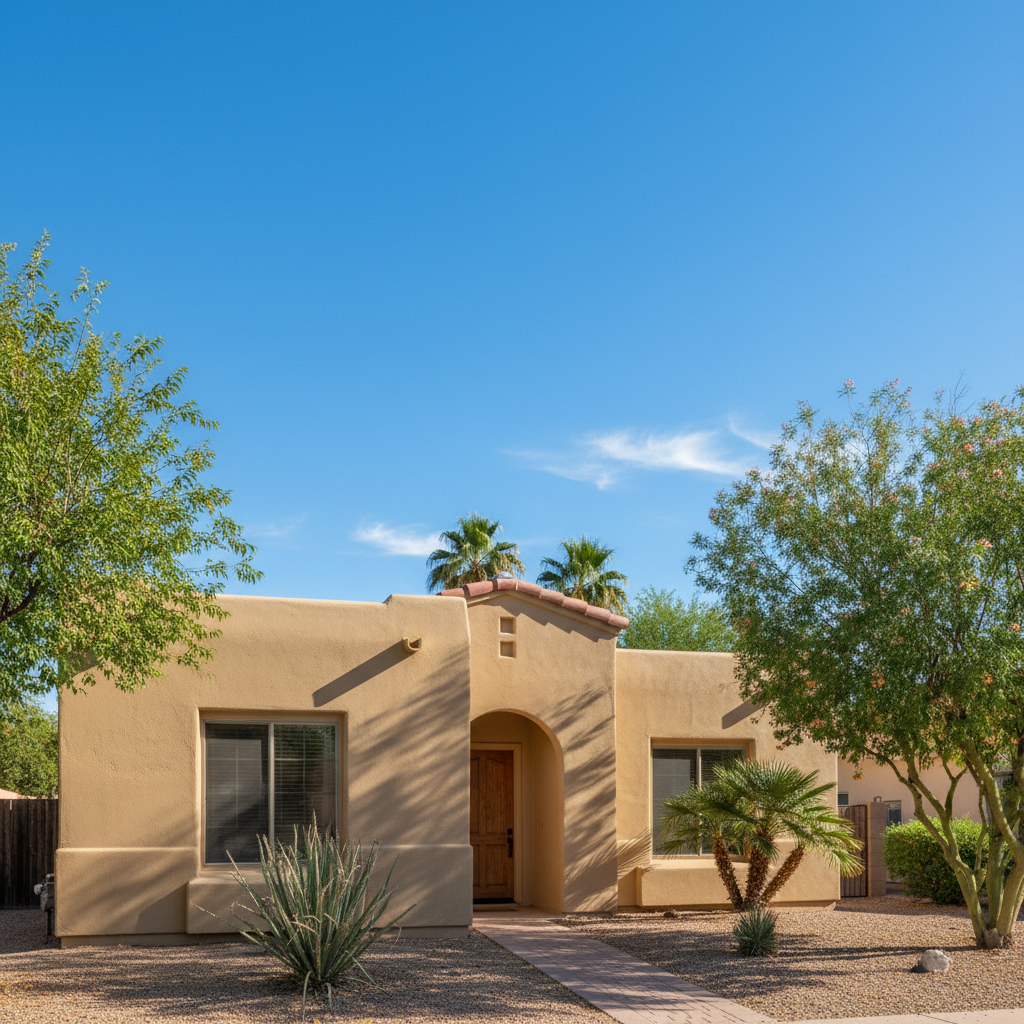
The intense Chandler summer heat does not just drain your cooling costs; it bakes the exterior of your house day after day. If you have been looking at your faded walls and wondering when you can finally get a fresh coat of paint on them, timing matters more than you think. You cannot just apply paint to stucco whenever you feel like it. Our desert climate throws some unique challenges at exterior coatings, and ignoring them means watching your investment peel, blister, or chalk up much too fast.
Why Chandler's Climate Dictates Your Painting Schedule
Out here in the East Valley, we deal with extreme temperature swings, intense UV exposure, and dry air that sucks moisture out of products before they have had a chance to cure properly. When the mercury climbs past 100 degrees for months on end, acrylic paint dries much too fast. That rapid evaporation prevents the binder in the paint from forming a proper film, which leads to early failure. Precision Stucco Chandler sees it all the time on homes over in Clemente Ranch or up near Ocotillo. The sun bakes the south-facing walls until the paint literally turns to powder.
That is why timing is very important. You want to aim for the shoulder seasons when our weather actually cooperates.
The Sweet Spot: When to Schedule Your Painting Project
Late fall through early spring is prime time for Exterior Painting around here. November through February gives us those crisp, mild days where temperatures stay reliably between 65 and 85 degrees. The sun is still out, but it is not trying to fry everything on contact. Paint cures at a normal rate in these conditions, giving you that maximum adhesion and longevity you are paying for.
Winter mornings can sometimes bring a touch of frost or heavy dew out near the greenbelts, so our team usually does not start rolling until the sun burns that off and the wall temperature hits 50 degrees. But once it does, you get a solid window of ideal working conditions for Exterior Painting in Chandler, AZ.
Protecting Your Stucco Investment Year-Round
Getting a fresh coat of high-grade elastomeric or 100 percent acrylic masonry paint on your walls is only half the battle. You also have to keep an eye on things between paint jobs. Here is what you should look for:
- Hairline cracks that pop open during our rare monsoon downpours when the soil expands and contracts.
- Chalking or fading on walls getting direct southern exposure.
- Sprinkler heads spraying directly against the bottom course of your stucco, leaving hard water mineral deposits.
Fixing minor hairline cracks with an elastomeric patch before they widen saves you a lot of grief later. Precision Stucco Chandler always tells homeowners to walk their perimeter twice a year—once when it cools down in October and once when it warms up in April. Catching small issues early keeps your paint job looking sharp and protects that underlying scratch coat, brown coat, and finish coat from moisture damage.
Do not wait until the stucco starts failing completely to give your home some attention. Plan your Exterior Painting project around the cooler months, use quality products rated for the desert, and your exterior will easily handle whatever the Arizona elements throw at it.