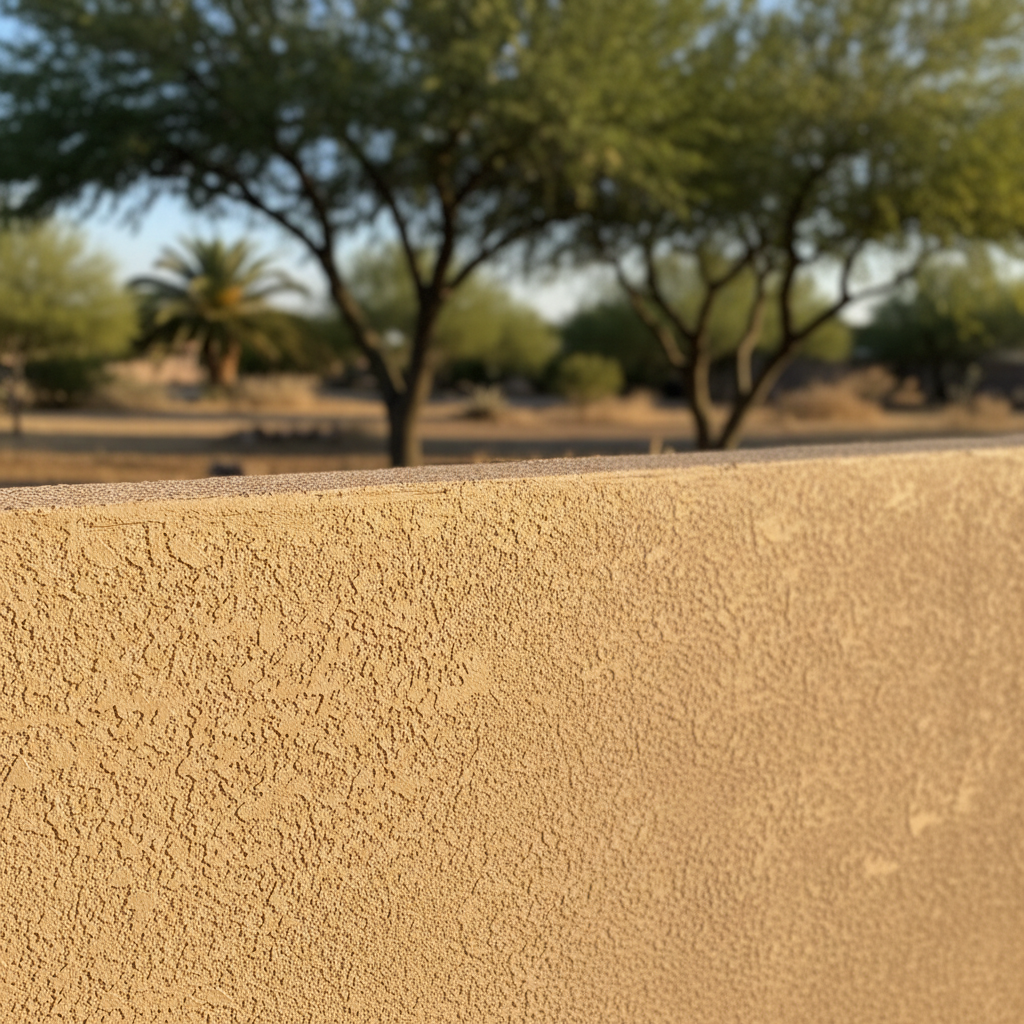
Stucco cracking on an exterior wall often makes homeowners wonder if they can patch it themselves. Living out here in Chandler, Arizona, the local desert heat and caliche soil put heavy stress on residential stucco. Planning a stucco project requires a realistic plan for what a homeowner can handle on a weekend morning and what requires actual trade experience.
Before You Start: Assessing the Real Damage
Homeowners should walk around their property during the early morning light when shadows are long. Look closely at the finish coat. Hairline cracks under a sixteenth of an inch happen to houses in neighborhoods like Ocotillo or Sun Groves as the ground settles. Those minor cracks are usually fine to tackle yourself. But if you see bulging sections, hollow-sounding areas when you tap the wall, or dark water stains around your windows, put the DIY trowel down immediately.
Here is the breakdown of the divide:
- Small hairline cracks and minor nail pops: Total DIY territory. Grab some elastomeric patching compound and a putty knife.
- Staining or faded color finishes: Great weekend project if you are comfortable using a paint sprayer or roller with masonry paint.
- Large patches over two square feet, bubbling finish coats, or any structural lath exposure: Call a pro.
During the Project: Prep Work Makes or Breaks It
Tackling a minor repair or patching an old doorbell hole means the secret is all in the preparation. Do not just slap mud over dirty stucco. You have got to clean out loose debris with a wire brush and slightly dampen the area so the dry desert air does not suck all the moisture right out of your patch before it sets. Mix your patching material according to the bag instructions—do not just guess the water ratio.
Managing a larger project and hiring out the heavy lifting means you should keep your pets and patio furniture well clear ofığı the work zone. Stucco dust gets everywhere, and monsoon season winds can kick up unexpected gusts that ruin a fresh brown coat.
After the Work is Done: Curing in the Desert
People always underestimate how fast materials dry out in Arizona. If you just finished patching a wall, you might need to mist it gently with water over the next twenty-four hours to help it cure properly instead of cracking from rapid dehydration.
Precision Stucco Chandler gets calls all the time from people who tried to patch a huge wall section themselves only to find the texture stands out like a sore thumb against the rest of the house. Matching lace, skip-trowel, or dash finishes takes a practiced wrist. If the repair looks worse than the crack did, call Precision Stucco Chandler for Stucco Contractor work in Chandler, Arizona. Knowing your limits saves you time, money, and a lot of frustration on your weekend.